| _ga | Se usa para distinguir a los usuarios. Caduca a los 2 años. |
|---|---|
| _gid | Se usa para distinguir a los usuarios. Caduca a las 24 horas. |
| _gcl_au | Se usa para hacer el tracking de las conversiones. Caduca a los 3 meses. |
| _dc_gtm_UA-4554452-1 | Se usa para limitar el porcentaje de solicitudes. Caduca al minuto. |


Our educational philosophy is based on a Christian humanistic approach and a personalised model of education that places each child at the centre of the teaching and learning process.
To achieve the holistic development of every child, it is essential that the different factors involved in education work together in a consistent and coherent way. In particular, this means ensuring strong alignment between teaching methods, the example set by the teacher, the school environment, and families.
When these four elements work hand in hand, it becomes much easier to nurture specific values, because children learn not only from what we say, but also from what we do. They learn from the atmosphere created at home, the way we interact with others, the values reflected in our learning environments, and the everyday experiences that surround them.
Among the various teaching principles that guide our educational approach, we would like to highlight the following:
INFANTIL - 0 to 3 YEARS
1. Active and Meaningful Learning. We promote active and meaningful learning by balancing children's initiative with the guidance of the teacher, who plans learning experiences and ensures an environment that encourages active participation and discovery.
2. Emotional Well-being. We place great importance on children's emotional development by creating a safe, caring, and nurturing environment that supports positive learning experiences and encourages the expression of emotions.
3. Consistent Routines and Healthy Habits. We establish consistent daily routines and foster healthy habits related to eating, rest, hygiene, and play. These are essential foundations for children's well-being and learning.
4. Motor and Sensory Development. We give special attention to the development of motor skills and sensory abilities. Movement and sensory exploration are fundamental in early childhood education, providing the foundation for all future learning.
5. Language Development. We prioritise the development of language as the basis for all subsequent learning. In early childhood education, oral language is at the heart of the learning process and is essential for the successful development of early reading and writing skills.
INFANTIL - 3 to 6 YEARS
1. Active and Meaningful Learning. We promote active and meaningful learning by balancing children's initiative with the teacher's guidance and modelling. Teachers carefully plan learning experiences and create an environment that encourages active participation, exploration, and discovery.
2. Learning Environments. Our methodology is organised around carefully designed learning environments that promote children's independence, provide personalised support, and respect individual learning rhythms and stages of development. These thoughtfully prepared spaces are rich in materials and learning opportunities, inspiring curiosity and a love of learning.
3. Highly Qualified Teachers. Our teachers are highly trained both professionally and personally. Through an ongoing professional development programme, we ensure continuous improvement, educational innovation, and the highest quality in our teaching methods and pedagogical practices.
4. Partnership with Families. We foster a strong partnership between school and home by encouraging active family involvement in school life. Families are invited to participate in celebrations, accompany their children into the classroom each morning and speak with their child's teacher, attend individual parent–teacher conferences, termly meetings, and family education programmes, among other activities.
5. A Holistic Education. Our educational approach focuses on the development of the whole child, nurturing essential values and life skills such as honesty, independence, social skills, decision-making, empathy, and creativity, while also ensuring that children acquire the knowledge and competencies established in the Early Years curriculum.


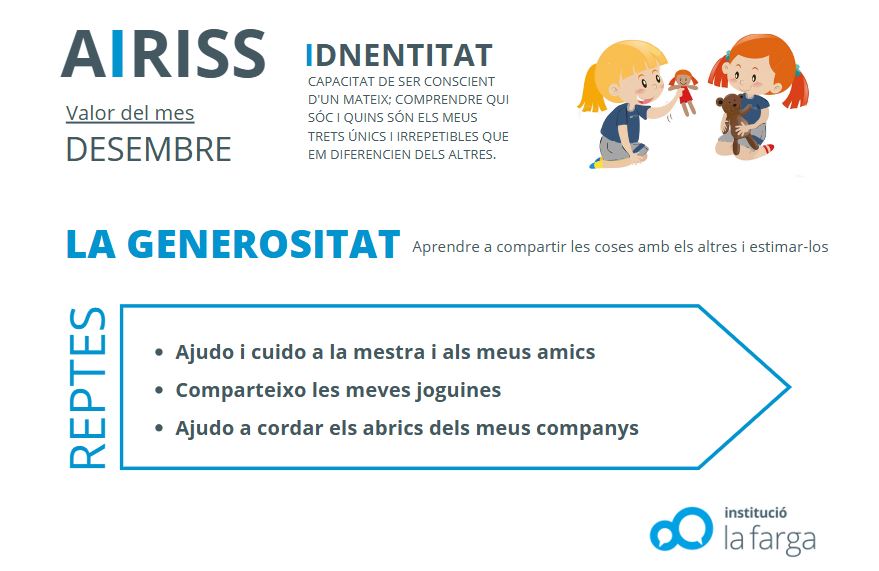
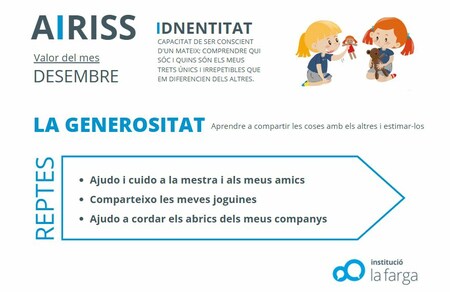
 Generosity